
Your Farmers Dozen Warm Weather Collection
Grow Your Own Bouquets — Right at Home
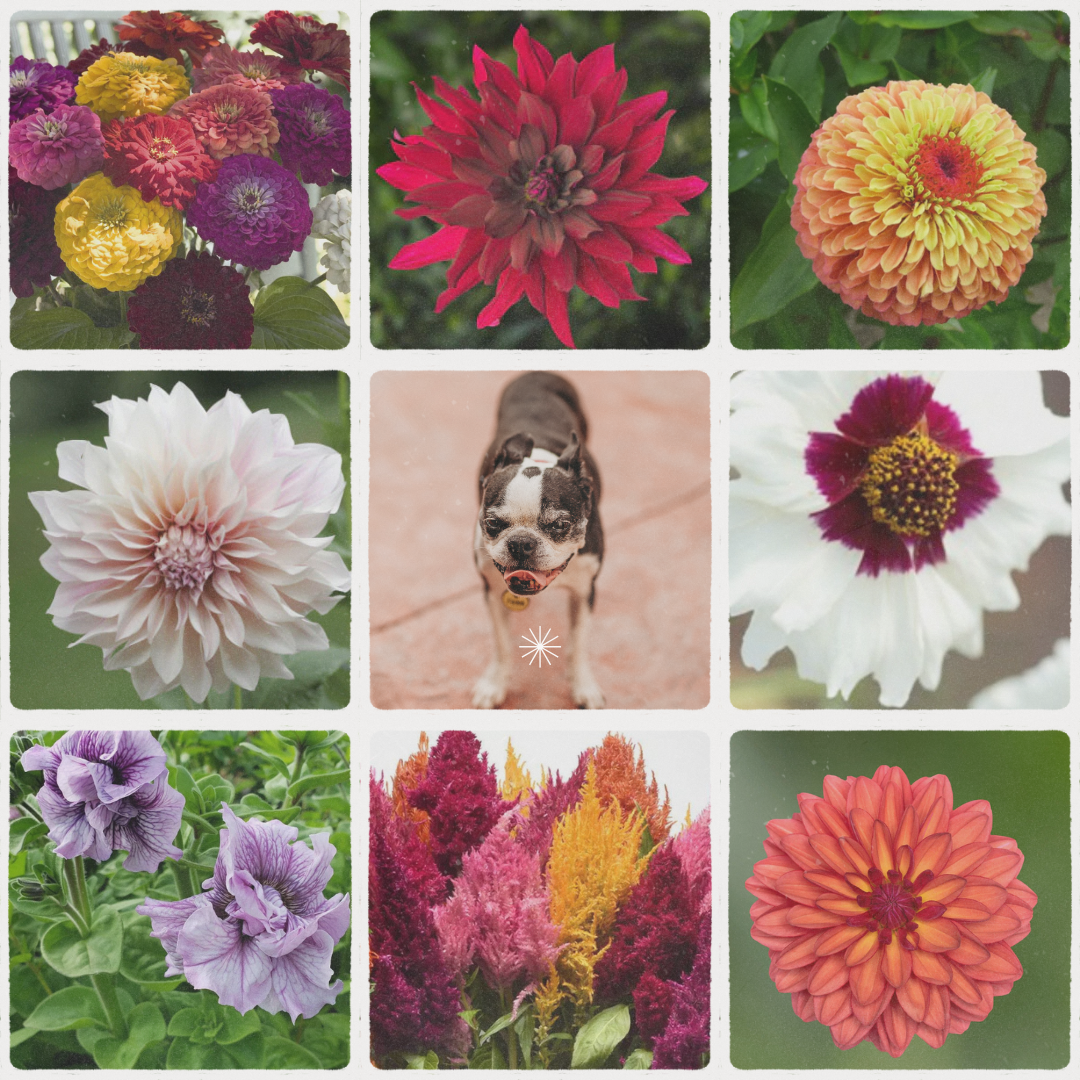
Thank you for bringing flowers into your life in a whole new way. This kit is designed to give you a steady supply of beautiful blooms.
What’s Included
Healthy, ready-to-plant seedlings
Basic support materials — 2 pieces of support netting and zip ties to secure it
A curated mix of cut flowers chosen for beauty and productivity
When to Plant
Plant “about” now. A good rule of thumb for heat loving plants is to plant once we have consistent night time temps in the 50’s. Cool soil and temps are going to slow them down. If you cannot plant right away, find them a shaded spot outside and water twice a day, bring them inside overnight.
Where to Plant
Choose a spot with full sun (at least 8+ hours daily)
Good drainage is key — flowers don’t like “wet feet”
9 square feet of garden space — you will plant 1 dahlia in a square foot. All the others can be planted 2 per square foot. The tight spacing hjelps them grow tall. We space them even closer at the farm!
Lay your flower bed out to measure 3 × 3 feet. You will be amazed at how much you can produce in this small space.
How to Plant
Loosen soil and mix in compost if you have it
Plant 2 seedlings per square foot (1 for dahlias). Plants should be 4–6 inches apart from each other. This tight spacing will encourage long stems, and the plants will help support each other.
Gently remove seedlings and plant at the same depth as their container
Water in well right after planting. Water daily for the first 7 days if it does not rain. Provide one inch of water weekly. Plants need more water when it is hot outside. Water in the morning (preferred) or evening. Mid day watering is a no-no.
Mulch your plants if you can. Mulch helps soil retain water, deters weeds, and provides organic matter for your soil health.
Watering
Water in well right after planting
Water daily for the first 7 days if it does not rain
Water deeply 2–3 times per week unless there has been significant rain (more in hot weather)
Aim for the base of the plant (not the leaves)
Consistent and deep watering = stronger stems and more blooms
Support (Essential)
Use the included netting (before plants get tall). Place one layer at about 12 inches off the ground and the other at 2.5–3 feet off the ground. You may find you need to adjust them as the plants grow.
We recommend 4 six-foot metal stakes driven into the ground at least one foot. We use these.
This video does a great job of showing how to install support netting and why it is so important. You can start the video at 2 minutes and 40 seconds in to get straight to the action. You don’t need side posts since your flower patch is small. Have the zip ties on hand to make sure your netting is taut.
This keeps stems straight and bouquet-ready.
Pinching
Many plants benefit from pinching. Pinching means cutting the main stem down to encourage branching.
This short video shows you how to pinch. Not all plants benefit from pinching.
See the crop-specific information below to see where we recommend pinching.
Harvesting
The more you cut, the more they bloom! This is general harvesting information. One of the trickiest parts of cut flower farming is knowing when it is just the right time to harvest. See the specific recommendations listed for each crop below.
This is a hard one, but very important. Cut deep. Very deep. It is so tempting to cut just the stem length you need for a bouquet, but it’s a mistake. Cutting deep will force the plant to produce more long straight stems. Short cuts may increase the number of flowers initially but they will be weak stems and the plant will produce shorter and fewer usable stems.
Harvest and then strip. You want to remove most if not all of the foliage. The fewer leaves you leave on means the stem will be able to better hydrate the flower. Do a little googling on specific crops to learn more about which crops you can leave with more foliage.
Give yourself grace! All your flowers will be beautiful — even if you don’t catch them at the perfect moment.
Harvest in the early morning or evening. You want to harvest when the plant is well hydrated.
Use clean, sharp snips. These are my favorite.
Cut stems deep and often — this encourages more flowers. The plant’s goal is to produce seeds. If you keep cutting the flowers, the plant will continue to produce flowers.
Not all flowers will produce flowers for the entire season. Pay attention to your plants and learn their patterns. That’s part of the fun.
Place immediately in cool water with flower food. Let them hydrate in a cool spot for at least 4 hours (overnight is great) before arranging them. If you have the ability to let them hydrate in a cooler, do it. (Never put zinnias or basil in a cooler — it’s too chilly for them.)
Pro Tips for More Blooms
Don’t be shy — cutting actually increases production
Keep up with harvesting to prevent plants from going to seed
A little fertilizer halfway through the season can boost growth
Mulch works wonders
Specific Recommendations for Your Collection
Dahlias
Spacing: 1 plants per square foot
Pinch: Pinch out the mail stem when it is 8-12 inches tall. Leave 2-3 sets of leaves below the pinch.
Disbud: This is optional, but a good practice. Dahlias will have a center flower and form buds on each side. Removing the smaller side buds will give you a bigger central flower. If bouquets are what you are after, this is to your advantage
Harvest: Harvest when the flower is about 75% open for the longest vase life. Dahlias won’t develop much in the vase. They also don’t have fantastic vase life, but we forgive them because they are beautiful.
Zinnia
Spacing: 2 plants per square foot
Pinch: Make the cut of the first bloom deep—leaving 2-3 sets of leaves below.
Harvest: Do the wiggle test! Zinnias need to mature on the plant of they will bend. Never put them in a cooler.
Celosia (Hands down my favorite flower)
Spacing: 2 plants per square foot
Pinch: Yes — pinch at 6–12 inches to encourage branching. Pinch down to 3–4 sets of leaves.
Harvest: When the blooms are fully developed, colored, and firm, but before they begin to set seed. They can be harvested after they set seed just be aware that they will drop a zillion tiny black seeds.
Coreopsis
Spacing: 2 plants per square foot
Pinch: Optional. Try one with pinching and one without if you like a science experiment.
Harvest: Harvest when buds just begin to open. Additional buds on the cut stem will continue to open in the vase. Cut deeply and regularly for continuous flowers all season.
Petunia
Spacing: 2 plants per square foot
Pinch: yes. Pinch when 6-12 inches tall and leave 2-3 sets of leaves.
Harvest: Harvest when 1-2 flowers on the stem are open and additional buds will open in the vase.
Petunias are heavy feeders and will benefit from regular fertilization.
Basil
Spacing: 1 plants per square foot
Pinch: Yes. Pinch when 8-12 inches tall. Pinch down to 2-4 sets of leaves.
Harvest: Harvest tips for kitchen use enough so that flowers don’t form. Harvest for bouquets (Long cuts) when stems start to turn woody.
From My Farm to Your Garden
This kit is built from the same flowers I grow and use in my own bouquets. My hope is that it brings you a moment of beauty, a reason to step outside, and maybe even a new favorite ritual.
If you share your blooms, I’d love to see them.
Tag: @kirsten_mudpuppy
